The Right Time to Start Piano Lessons for Kids—And Why It Matters
As parents, we are always weighing timing. Too early, and a child may feel overwhelmed. Too late, and we worry we missed a window. When it comes to music and especially piano, this question comes up constantly. We hear it every week from families across Pittsburgh: “Is my child ready for piano lessons, or should we wait?” At Bee Sharp Music Studio, we have guided hundreds of children through their first musical steps, and we have seen firsthand how the right timing can shape confidence, discipline, and creativity for years to come.
Starting piano lessons is not just about learning notes or playing songs. It is about cognitive development, emotional growth, and building a lifelong relationship with music. The right start can spark joy and curiosity. The wrong approach, or the wrong timing, can turn something beautiful into a chore.
If you are reading this as a practical, slightly skeptical parent, you are not alone. You want to know what “ready” actually looks like, what skills matter, and how to avoid signing your child up for something that becomes a weekly battle. In this guide, we will walk you through when kids are typically ready, what matters more than age alone, and how Pittsburgh piano teachers like us help families make confident, informed decisions.
When Is the Right Time to Start Piano Lessons for Kids?
Most children are ready to begin piano lessons between the ages of 5 and 7, but readiness depends far more on developmental signs than a specific age. A child is usually ready when they can focus for 20 to 30 minutes, follow simple instructions, recognize patterns, and show curiosity about music. Starting piano lessons at the right time matters because early music education supports brain development, improves coordination, builds discipline, and boosts confidence.
Beginning too early, before attention span or motor skills are developed, can lead to frustration, while starting later can make it harder to build foundational habits. With age-appropriate teaching methods and encouragement, children who start piano lessons at the right developmental stage are more likely to enjoy learning, progress steadily, and develop a lasting love for music. Pittsburgh piano teachers often evaluate readiness using these practical signs, not just age.
How To Start Teaching Piano To A Child?
Starting piano lessons successfully begins long before a child sits at the keyboard. The first step is creating a positive association with music. This can be as simple as listening to piano music at home, attending live performances, or letting your child explore the keys without pressure. When the piano becomes familiar, it stops feeling like a strange object that comes with rules attached.
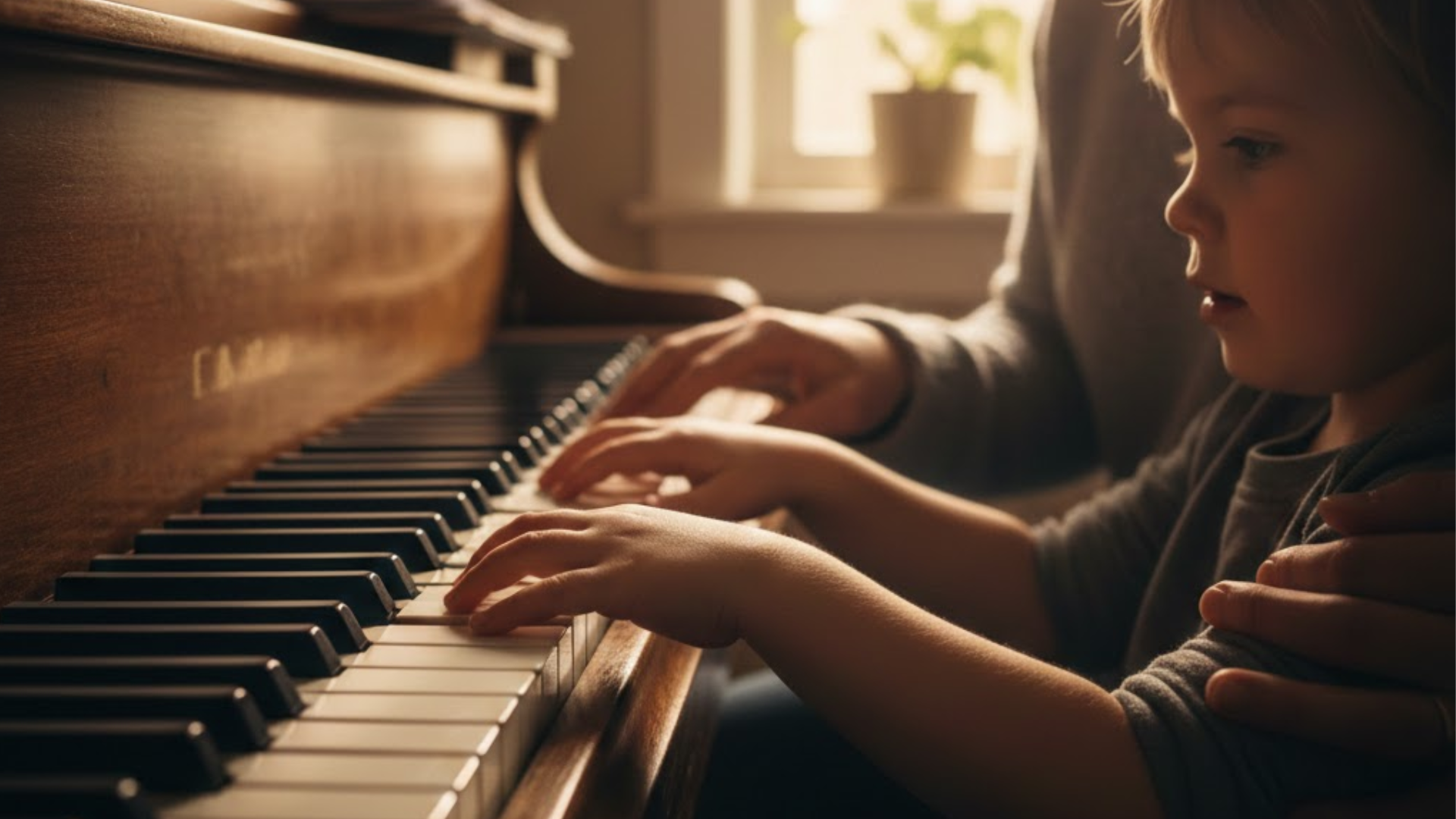
Formal instruction should start slowly, focusing on fun, rhythm, and familiarity rather than perfection. At Bee Sharp Music Studio, we begin by meeting the child where they are. Our Pittsburgh piano teachers introduce posture, hand position, and simple patterns through games and stories, especially for younger beginners. Short segments, frequent encouragement, and repetition help children feel safe and capable.
Parents sometimes ask whether they should teach their child at home first. Light exploration is great, but the early technical pieces matter more than many families realize. Hand shape, tension, and posture can become habits quickly. Working with Pittsburgh piano teachers early helps children learn correctly from the start while still enjoying the process.
If you want to support learning at home without turning into the “practice police,” the best approach is simple: be present, celebrate effort, and keep music in the environment. Your job is not to teach. Your job is to help the habit feel normal.
When Should A Child Start Piano Lessons?
While ages 5 to 7 are common starting points, readiness matters more than the number on a birthday cake. A child is usually ready when they can sit for a short period, follow a few steps in sequence, and tolerate gentle correction without shutting down. It also helps if they can distinguish left from right, at least most of the time. That sounds small, but on the piano it is a daily skill.
Emotional readiness is just as important. Some kids love structure and thrive with small goals. Others need a slower ramp-up because they are sensitive to mistakes or get frustrated quickly. Pittsburgh piano teachers often look for willingness, not perfection. A child does not need to be “gifted.” They need to be open.
Some parents worry about starting too late. The truth is that children can begin piano at many ages and still succeed. What matters most is consistency and encouragement. A simple next step is scheduling an introductory lesson or readiness check. At Bee Sharp Music Studio, our Pittsburgh piano teachers prioritize transparency and fit, helping families decide when, and how, to begin with confidence.
What Are The Benefits Of Piano For Kids?
Piano lessons offer far more than musical ability. Learning piano supports memory, strengthens pattern recognition, and improves coordination because children must combine listening, reading, and movement at the same time. According to the American Psychological Association, music education supports brain development and executive function in children.
Emotionally, piano builds patience, resilience, and self-esteem. Children learn how to practice, work through challenges, and celebrate progress. Socially, performing, even in a casual setting, helps kids gain confidence in front of others. Over time, these benefits extend well beyond music.
As Pittsburgh piano teachers, we see this growth in real life. A child who once hesitated to try new things starts taking small risks. A child who struggled with follow-through learns how to return to a task and improve it. A child who needed external validation begins taking pride in private progress. That is the long game. It is also why choosing the right time to start matters.
When families ask whether piano is “worth it,” this is usually what they are really asking: Will this help my child grow, not just play songs? With thoughtful instruction from Pittsburgh piano teachers, the answer is very often yes.
What Is The First Thing To Learn On The Piano?
The first lesson is not about playing a full song. It is about building a foundation that keeps a child from feeling lost. Early on, children learn how to sit properly, where their hands belong, how to find patterns on the keyboard, and how rhythm works.
Most kids start by noticing the groups of two and three black keys. That simple pattern becomes a map. From there, we introduce finger numbers and small melodic patterns that feel achievable. Reading music comes in gradually, and it should feel like decoding something interesting, not like being handed a worksheet.
At Bee Sharp Music Studio, our Pittsburgh piano teachers believe early success builds momentum. That is why we blend listening, movement, and hands-on play. Kids learn faster when the lesson uses more than one pathway. They also stay motivated because they feel capable from day one.
If you are a parent watching the first few lessons, you might wonder if it is “too easy.” That is often a good sign. The goal early on is confidence plus correct habits. Skilled Pittsburgh piano teachers know that a strong start prevents frustration later.
Why Starting Too Early Can Backfire
Starting piano lessons before a child is developmentally ready can create stress and resistance. Without enough attention span or fine motor control, lessons can feel confusing. A child may struggle to coordinate both hands, maintain posture, or track simple instructions long enough to experience success. When that happens repeatedly, they can start to believe they are “bad at music,” even when the real issue is timing.
You might see clues at home. Your child avoids sitting still for any structured activity, melts down when corrected, or becomes anxious about doing things “right.” In those cases, the best move is not to push harder. It is to adjust the approach. Pittsburgh piano teachers often recommend music readiness activities, shorter lessons, or a playful pre-piano period rather than forcing traditional instruction too soon.
Starting early can work when the format matches the child. But early starts fail when expectations are adult-sized. The right Pittsburgh piano teachers will tell you that readiness is not a moral achievement. It is simply a developmental stage. Waiting a bit can protect the relationship your child forms with music.
If you are worried that waiting means losing time, remember this: a child who starts slightly later and enjoys it often progresses faster than a child who starts early and dreads it. That is one reason Pittsburgh piano teachers place so much emphasis on joy and confidence at the beginning.
Final Thought
The right time to start piano lessons is not about pressure or comparison. It is about readiness, joy, and guidance. When children begin at the right developmental stage with the right support, piano becomes more than a lesson. It becomes a source of confidence, creativity, and lifelong growth.
As Pittsburgh piano teachers, we have seen how thoughtful timing and encouraging instruction make all the difference. Some kids need a gentle start. Others are ready to dive in. Both paths can lead to success when the plan matches the child.
If you are on the fence, trust what you are noticing. Your child’s attention span, emotional flexibility, and curiosity tell you more than a number ever could. And when you work with Pittsburgh piano teachers who prioritize fit, you do not have to figure it out alone.
If you are wondering whether your child is ready for piano lessons, we would love to help. At Bee Sharp Music Studio, we specialize in age-appropriate, confidence-building piano instruction led by experienced Pittsburgh piano teachers. Reach out today to schedule a conversation or introductory lesson, with no pressure, just honest guidance to help your child begin their musical journey the right way.
Follow our social media pages below: